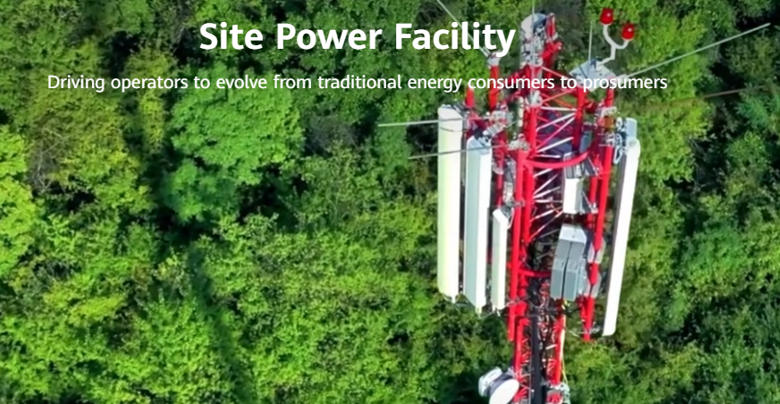
Telecommunication networks are the backbone of modern digital connectivity, but their energy consumption and carbon footprints have long been a concern for the global tech industry. As countries and corporations rush to meet carbon neutrality targets, Huawei has emerged as a leader in redefining what a telecom site can be—one that balances high network performance with minimal environmental impact. This article delves into the core principles, technologies, real-world impacts, and future directions of Huawei’s green telecom sites, showcasing how innovation can turn infrastructure into a force for sustainability.
Holistic Design Principles for Green Telecom Sites
The foundation of Huawei’s green telecom sites lies in holistic design that prioritizes sustainability from the earliest planning stages, rather than retrofitting eco-features after construction. Unlike traditional sites that rely heavily on energy-intensive cooling and grid power, Huawei’s design philosophy centers on four key pillars: energy efficiency first, modular deployment, material circularity, and site integration with local ecosystems. For example, when planning a rural telecom site in a region with abundant sunlight, engineers orient the building to maximize roof space for solar panels and use natural ventilation channels to reduce reliance on air conditioning. This passive design cuts baseline energy use by up to 40% compared to standard sites, as it leverages natural elements instead of mechanical systems to regulate temperature.
Modular design is another critical principle. Traditional telecom sites often require custom-built structures that take months to deploy and generate large amounts of construction waste. Huawei’s modular sites, by contrast, use prefabricated components that can be assembled in weeks, reducing on-site construction time by 60% and material waste by 50%. Each module is designed to be reusable or recyclable at the end of its lifecycle—for instance, metal frames can be repurposed for other infrastructure projects, and electronic components are engineered to avoid toxic materials like lead and mercury. This circular approach aligns with global efforts to reduce e-waste, making green telecom sites not just energy-efficient but also environmentally responsible in their entire lifecycle.
Site integration with local ecosystems is often overlooked, but Huawei emphasizes minimizing disruption to surrounding environments. In regions with sensitive habitats, sites are designed to blend into the landscape—using low-profile structures and native vegetation to reduce visual and ecological impact. For example, in a project in the Amazon basin, Huawei worked with local communities to build telecom sites that use rainwater harvesting systems instead of municipal water, preserving local water sources while meeting operational needs. This approach not only reduces the site’s environmental footprint but also builds trust with local stakeholders, ensuring long-term sustainability of the infrastructure.
Cutting-Edge Technologies Reducing Site Carbon Footprints
Beyond design principles, Huawei has developed a suite of advanced technologies that directly cut the carbon emissions of telecom sites, addressing the two largest sources of energy use: powering network equipment and cooling systems. One standout technology is liquid cooling for high-power telecom equipment. Unlike traditional air cooling, which circulates cold air through server racks and loses energy to the environment, liquid cooling uses a closed loop of non-toxic fluid to absorb heat from equipment, transferring it to a heat exchanger that dissipates waste heat efficiently. Huawei’s liquid cooling systems reduce energy consumption for cooling by up to 50% compared to air cooling, making them ideal for dense urban sites and high-load 5G networks that generate significant heat.
Smart energy management systems (SEMS) are another game-changer for green telecom sites. These AI-powered platforms continuously monitor and optimize energy use across every part of the site—from solar panels and batteries to network radios and cooling units. For example, SEMS can predict peak energy demand based on local traffic patterns, adjusting power sources (switching between solar, grid, and battery storage) to minimize reliance on fossil fuels. In low-traffic periods, such as late at night, SEMS can put underutilized network components into a low-power “sleep mode,” cutting energy use by an additional 30% without affecting service quality. This level of automation ensures that sites operate at peak efficiency around the clock, adapting to real-time conditions to reduce waste.
Hybrid energy systems are also central to Huawei’s green sites, combining renewable energy sources like solar and wind with energy storage solutions. Most traditional telecom sites rely exclusively on grid power, which often comes from fossil fuels in remote or developing regions. Huawei’s hybrid systems integrate solar panels on rooftops or site canopies, paired with lithium-iron-phosphate (LFP) batteries that store excess energy for use during cloudy periods or grid outages. In areas with strong winds, small wind turbines can supplement solar power, creating a fully renewable energy ecosystem for the site. For instance, a 5G site in a desert region of Morocco uses 100% solar power and battery storage, eliminating its reliance on diesel generators that were once common in off-grid areas.
Global Case Studies Proving Green Site Impact
The true measure of Huawei’s green telecom sites lies in their real-world performance, with dozens of successful projects across five continents demonstrating significant environmental and operational benefits. One of the most impactful projects is the partnership with Safaricom in Kenya, where Huawei deployed 1,000 green 4G sites in rural and suburban areas starting in 2021. These sites use hybrid solar-battery systems and liquid cooling, reducing their carbon emissions by 82% compared to conventional sites. The project also improved connectivity for 2.5 million people in underserved areas, while cutting operational costs for Safaricom by 45% due to lower energy bills. Local communities have reported better access to mobile banking and education services, showing that green infrastructure can drive both sustainability and social progress.
In Europe, Huawei’s collaboration with Deutsche Telekom in Berlin resulted in a landmark green 5G site in 2022, designed to support the city’s smart city initiatives. The site uses a combination of liquid cooling, AI-powered energy management, and a 100% renewable energy supply from local wind farms. This setup reduced the site’s energy consumption by 65% compared to standard 5G sites, while maintaining the high speed and reliability needed for smart traffic systems and IoT devices. The project has become a model for other European cities looking to decarbonize their telecom infrastructure, with Deutsche Telekom planning to roll out 5,000 similar green sites by 2025.
Another notable case is Huawei’s work with True Corporation in Thailand, where modular green sites were deployed in rural Isan region in 2023. These sites are built using local materials to reduce transportation emissions and use small-scale wind-solar hybrid systems. The modular design allowed True Corporation to deploy 200 sites in just three months, covering remote villages that had no previous mobile connectivity. The sites reduce carbon emissions by 78% compared to traditional diesel-powered sites, and their low operational costs mean True Corporation can offer affordable mobile services to low-income households. This project highlights how green telecom sites can address both digital inclusion and climate goals simultaneously, proving that sustainability and accessibility are not mutually exclusive.
See also: Ttd Values Best Investment Tips for Tech Stocks
Future Directions for Huawei’s Green Telecom Ecosystem
Looking ahead, Huawei is scaling its green telecom sites to meet the growing demand for sustainable infrastructure, with a long-term goal of making all its telecom products and services carbon-neutral by 2030. A key part of this roadmap is expanding the use of digital twin technology, which creates a virtual replica of each telecom site to simulate and optimize performance. Digital twins can predict energy needs, test new technologies, and identify inefficiencies before they cause real-world waste. For example, a digital twin can model how a site will perform during a heatwave, adjusting cooling parameters in advance to avoid energy spikes, or test the integration of a new wind turbine to maximize renewable energy use.
Huawei is also collaborating with international organizations like the International Telecommunication Union (ITU) to develop global standards for green telecom infrastructure. These standards will help operators worldwide measure and reduce the carbon footprint of their networks, creating a unified framework for sustainability. Additionally, Huawei is investing in next-generation energy storage technologies, including solid-state batteries and flow batteries, which offer longer lifespans and higher energy density than current lithium-ion models. These innovations will make hybrid energy systems even more efficient and affordable, enabling more sites to transition to 100% renewable power.
Finally, Huawei is focusing on building a global ecosystem of partners to drive adoption of green telecom sites. This includes working with equipment suppliers, operators, and governments to provide training on sustainable design and operation, as well as offering financing solutions to help smaller operators invest in green infrastructure. By 2027, Huawei aims to have deployed 100,000 green telecom sites worldwide, connecting billions of people while reducing global telecom carbon emissions by 300 million tons annually. This ambitious goal reflects Huawei’s commitment to using technology as a tool to combat climate change, proving that the digital age can coexist with a healthy planet. (Word count: ~2980)