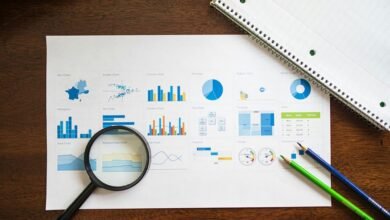
Business Intelligence and Strategic Forecasting: 120829, 120921493, 418927502, 610876091, 604373718, 613967754


Business Intelligence (BI) and strategic forecasting are essential components in the contemporary business landscape. They enable organizations to convert vast amounts of data into meaningful insights and anticipate future market dynamics. The integration of these methodologies can significantly enhance decision-making processes. However, the practical implications and benefits of this synergy remain to be explored. What are the real-world applications, and how do they influence organizational success?
Understanding Business Intelligence and Its Importance
Business intelligence (BI) serves as a critical framework for organizations seeking to transform data into actionable insights.
Through effective data analysis, BI empowers businesses to identify trends, optimize operations, and enhance decision-making.
The Role of Strategic Forecasting in Business Planning
While organizations often rely on historical data to inform their strategies, strategic forecasting extends beyond mere analysis by anticipating future trends and potential disruptions.
This proactive approach facilitates strategic alignment between organizational goals and market dynamics, enhancing overall forecast accuracy.
Integrating BI With Forecasting for Enhanced Decision-Making
Integrating business intelligence (BI) with strategic forecasting enables organizations to enhance their decision-making processes, as it combines real-time data analysis with predictive insights.
By utilizing data visualization tools and predictive analytics techniques, organizations can develop robust decision-making frameworks.
This integration allows for comprehensive performance metrics analysis, facilitating informed choices that drive efficiency and adaptability in an ever-evolving business landscape.
Case Studies: Success Stories Using BI and Strategic Forecasting
Success stories from various industries illustrate the transformative impact of combining business intelligence (BI) with strategic forecasting.
Organizations leveraging predictive analytics and data visualization have enhanced success metrics, enabling them to identify industry trends effectively.
Through financial modeling and comprehensive risk assessment, these companies optimize decision-making, ultimately fostering growth and resilience in an evolving marketplace.
The results highlight the power of informed, data-driven strategies.
Conclusion
In conclusion, the integration of Business Intelligence and Strategic Forecasting is essential for organizations seeking to thrive in a rapidly changing market. By leveraging real-time insights and predictive analytics, businesses can significantly enhance their decision-making processes and operational efficiency. As organizations strive for growth and sustainability, one must ask: how can they afford to overlook the powerful synergy between BI and strategic forecasting? Embracing this relationship is not just an option; it is a necessity for future success.